Partnership Between The Inn and National Cancer Institute Highlighted at Panel Event
Dr. Anthony Letai, Dr. Brigitte Widemann, and Dr. Jack Shern join The Inn community to discuss Advancing Hope: The Future of Pediatric Research
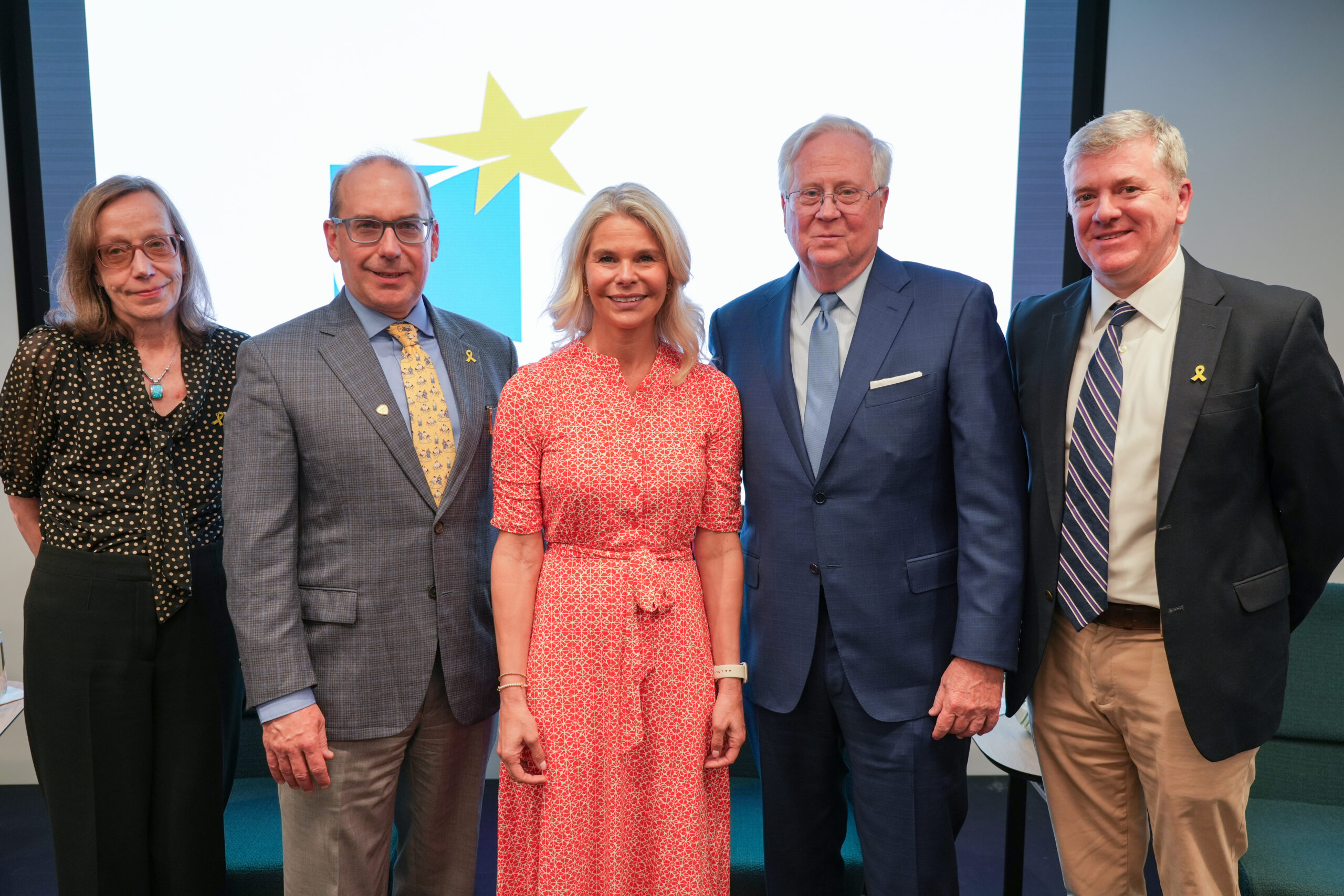
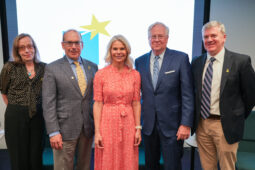
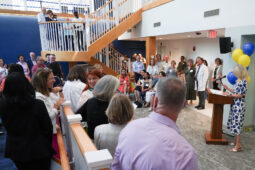
In front of community decision makers and supporters on the top floor of the Marriott International headquarters in Bethesda, The Children’s Inn at NIH hosted an event with leaders from the National Cancer Institute to discuss Advancing Hope: The Future of Pediatric Research.
Jennie Lucca, the CEO of The Children’s Inn welcomed the crowd and introduced the evening’s participants, who included the Director of NCI Anthony Letai (MD, PhD), Chief of the Pediatric Oncology Branch at NCI Brigitte Wideman (MD), and Physician Scientist in the Oncology Branch at NCI Jack Shern (MD). The event was moderated by Brian Kelly, Editor at Large and Executive Vice President at U.S. News and World Report and the immediate past Chair of The Children’s Inn Board of Directors.
From the start, the expert panel was effusive in their praise of The Inn and its vital role in the work they do at NIH.
“The Children’s Inn is an essential partner, not only for the NCI but for every NIH institute that sees patients,” Dr. Widemann said. “Pediatric cancer patients have a family. They have siblings. They may have a genetic predisposition to cancer, and we cannot forget that we have to take care of the entire family. They have a long life ahead of them. Incorporating psychosocial support is extraordinarily important.”
Dr. Letai, whose medical expertise is in adult oncology, expressed his enthusiasm for the future of research at NCI. He detailed how NCI spent more on extramural research in 2025 than in any other year of its history, a figure that is continuing to rise in 2026. He also offered enthusiasm for the ability of scientists and clinicians to incorporate artificial intelligence into their work, a tool that he said would accelerate, not replace, medical research.
“We want to make sure that the data that people produce is not only replicable, but is also valuable and transferrable for the actual human pediatric condition,” he said. “There is no way to do that other than running a clinical trial.”
The Inn, which launched the Building Extraordinary capital campaign that is powering The Inn of Tomorrow expansion and renovation project which will expand capacity by 25%, welcomes families in from around the globe for hundreds of clinical trials each year. The project is well into the second-and-final phase of construction, with an expected completion date of summer 2027. Kelly pointed out that the expanded Inn will be better suited to meet the needs of the full pediatric community, including patients who are older than The Inn’s current age limit of 30 years old.
As that age limit pushes forward, Dr. Shern explained, the impact of The Inn on the medical community will only expand.
“The pediatric community is teaching the adult community,” he noted. “People say ‘Why do you study these rare diseases? Why don’t you study the most common thing?’ They actually teach us how to do multiple things. Somewhere between 15-20% of the kids who get cancer have a predisposition to getting cancer. There’s a mutation already present in that family. That’s been a really interesting finding because you start to think not about treating those patients but about preventing that cancer from ever happening, and that would be a huge opportunity.”
As the audience engaged with the panel with questions of their own, the strong partnership between The Inn and NCI continued to be emphasized.
“I could give you multiple examples of patients who have had a long and grueling day at the NIH Clinical Center, and when they go back to The Children’s Inn they can relax,” said Dr. Widemann. “They meet other families, and for the first time in their life, they see someone with an identical cancer. I cannot tell you what that means for a patient.”
“What we have learned is tremendous,” she continued. “Without the support of The Children’s Inn, I can guarantee you they would not have come back. We would not have seen the patients and had this amount of learning. It’s a long-term commitment and collaboration that we have.”