A Lot of Fight Left in Ana
Four times, leukemia delivered body blows that threatened the life and career of the young doctor. Four times, Ana punched back. Now, she wants to help others do the same.

Ana knew exactly what she was looking at. An aspiring vascular surgeon who had recently graduated from medical school in her native Costa Rica, she had read the results of a complete blood count test more times than she could remember. The results in front of her now were not encouraging. The patient had no recent illness that could account for the distressing data. There were other possibilities, sure. But the chances of those were remote. This was, almost certainly, a case of acute lymphoblastic leukemia.
Ana had gotten her medical degree from the University of Costa Rica not long before she found herself staring at the completed CBC. She had graduated at the top of her class and was eager to get started on her residency. She knew that as a doctor, the day would come when she would have to be the one to give a patient bad news. Ana was trained to control her emotions and let the science speak for itself.
But she hadn’t trained for this. Because these results were her own.
Ana had been shown the chart by a friend of her mother, a doctor who was the director of a regional hospital. She had tracked her down after being notified of the results of her routine physical. Until then, October 4, 2019 had been a busy day, but a forgettable one. She had undergone a psychological test earlier that morning that was part of the annual program-mandated check-ups. It had gone fine. Except that her mother, a doctor herself, had kept calling and interrupting. Eventually, Ana had no choice but to quickly tell her mother that she was busy and hang up on her.
That, suddenly, made sense. After discovering her blood results, the director had reached out to her mother, knowing that she was uniquely suited to provide the personal and professional support Ana was going to need. With Ana preoccupied when her mother tried to break the news, the director decided that the best way to share this shocking development was by letting Ana review the information herself.
“She knew she had to be careful with what she said, because she didn’t want to alarm me,” Ana remembered.
And at first, she was in denial. “I was completely asymptomatic,” she said. “I had recently graduated from medical school. It couldn’t be right.” Emotionally, she could not have been less prepared for the news. But still, she had absorbed her medical training well. And she knew that if her name wasn’t on the file in front of her, she wouldn’t be thinking that. The diagnosis was real.
Fortunately, the diagnosis was also not as bad as it could have been. Acute lymphoblastic leukemia, Ana knew, was a serious and life-threatening cancer, but a more common variation of leukemia that was treatable. It would be a challenge, but one she was up for. Determined to get back to work, she faced it head on.
Ana began a course of chemotherapy, and for the first month, things seemed to be progressing normally. However, officially, she was still considered a high-risk patient. Doctors at home suggested a transplant, but as a doctor herself, Ana knew that transplants in Costa Rica weren’t her best shot.
So she began seeking a second opinion, and she found it at the University of Chicago, where Dr. Wendy Stock was an expert in acute lymphoblastic leukemia. Dr. Stock agreed with Ana that continuing chemotherapy, despite her status as a high-risk patient, was the best course of action.
While she continued her chemotherapy treatments, Ana studied for her residency exam. During the treatment plan, she took her exams and was awarded one of two available spots for training in vascular surgery.
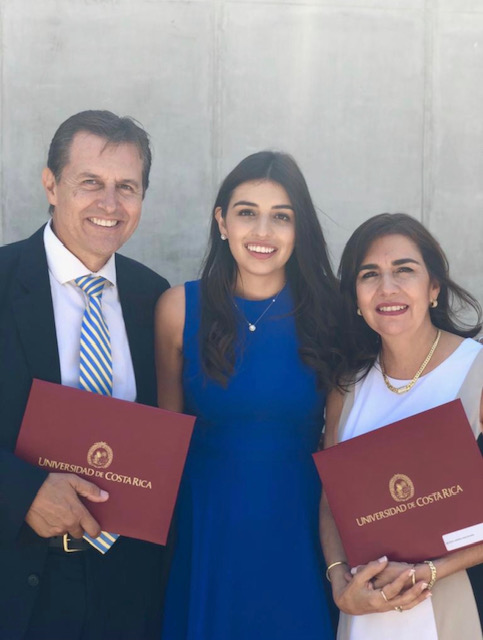
By the end of November 2020, Ana was finished with chemotherapy and was beginning to look forward to resuming her burgeoning career. “I thought everything was back to normal and I was done,” she recalled. “I got a glimpse of what my old life looked like, and I thought I’d get a chance to go back to it. But 20 days after I finished chemotherapy, I wasn’t feeling better. I wasn’t improving. And that was really weird.”
Deep down, Ana knew that what doctors were telling her – that she was in remission and that the worst was behind her – wasn’t true. Sure enough, another blood test showed that while her acute lymphoblastic leukemia was indeed in remission, she now had a second form of leukemia. Acute myeloid leukemia, a much more aggressive type of the disease.
Another shock, but no less determination to move forward. Ana began a new course of treatment immediately and was admitted to the hospital on Dec. 23, 2020.
Doctors knew that Ana’s tumor burden was much higher this time around, and tumor lysis syndrome, a potentially fatal metabolic emergency, was a serious and real concern. Reducing the tumor burden was paramount to prevent it. Shortly after she was admitted, though, her airway began to constrict and the need for chemotherapy became urgent. With treatment once again underway, Ana went to sleep on Christmas night in the hospital in Costa Rica. When she woke up the next morning, her world had gone blank.
“I started screaming,” she said, describing her initial reaction of confusion and shock. “I didn’t know if I was alive or not. I was in a lot of pain, because my left lung had completely collapsed. Of course, I panicked. What’s happening? Everything is black. Am I dead?”
Ana was quickly admitted to the ICU, where doctors were able to save her lung. The blindness, though, would become permanent.
“I was diagnosed as terminally ill,” she explained. Two months after she went blind, her leukemia proved to be resistant to chemotherapy. Without effective treatments available, there was nothing doctors in Costa Rica could do. So she once again turned to Dr. Stock, who set Ana up in a clinical trial in St. Louis, Missouri. It did not prove effective.
Looking back, Ana couldn’t help but laugh at the hopelessness of her situation in those terrifying days of early 2021.
“I was not in remission,” she said. “I had no insurance in the United States. My parents were paying for everything out of pocket. My only option was a transplant in the United States. It was that or lay in bed and say ‘I’m done, people.’ I didn’t want to do that. If I was going to go down, I was going to go down fighting.”
With the benefit of time and training, Ana knew her chances of survival were incredibly slim. Few experts in acute myeloid leukemia believed that a transplant would prove successful. It was too late, and too risky. But Ana was insistent that they try something, and Dr. Stock respected her wishes. The bone marrow transplant was performed at the University of Chicago, and miraculously, it worked beautifully.
Two cancers. One much more aggressive than the other. Ana had been robbed of her vision, and with it her dream of being a vascular surgeon. But she was alive, and for that she was grateful.
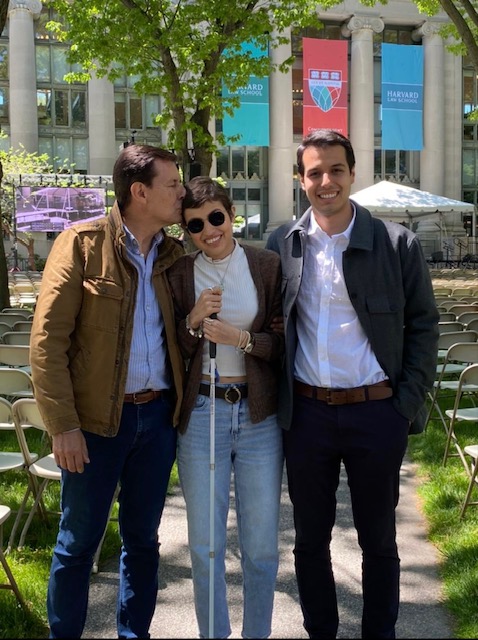
She returned to Costa Rica in February 2022, over a year after that chaotic day when she woke up unable to see. This time she was in remission and was feeling well. She began working at the hospital as a blind physician, ultimately taking on managerial roles as well. Despite everything, she was finding ways to contribute to the world of science. For more than six months, it really felt like the worst was behind her. And then, in October, she noticed something was wrong.
“My left hand wasn’t working that well,” Ana said. “All of a sudden I had motor problems, sensory problems. I needed my hands to type!”
At first, it didn’t seem to be related to the leukemia ordeals she had gone through. A physical therapist found signs of carpal tunnel, but therapy did nothing to help. Eventually, her doctors decided to do an ultrasound, and the findings were highly unusual. Ana’s bone marrow showed no signs of cancer. Her blood showed no signs of cancer. But tucked away in her nerves, there it was. A relapse of the acute lymphoblastic leukemia in her left median nerve. Yet another gut punch for Ana, who had already been through so much. But once again, she was ready for the fight.
Nerves are not a common place to find leukemia, particularly when there is no sign of it in the bone marrow or blood. Not many leukemia treatments penetrate the nerve. After consulting with Dr. Stock, Ana became aware of CAR-T therapy, a personalized form of immunotherapy where a patient’s own immune cells are genetically modified to attack cancer cells. It offered a realistic hope, but it came with an unrealistic price tag.
“It cost over half a million dollars to begin CAR-T therapy,” Ana explained. “We had already paid for a transplant that was over a million dollars.”
Medically, though, it seemed likely that CAR-T was what she needed. The transplant she had received for the acute lymphoblastic leukemia had been particularly aggressive, and more chemotherapy, which wouldn’t necessarily penetrate the nerve anyway, would carry risks that were not outweighed by the reward.
So Dr. Stock investigated CAR-T trials, and immediately her mind turned to the National Institutes of Health. There, she connected Ana with Dr. Nirali Shah, the head of the Hematologic Malignancies Section within the National Cancer Institute. Dr. Shah had a CAR-T clinical trial that she was recruiting for, and by February 2023, Ana was flying from Costa Rica to Washington to enroll in the protocol. When she arrived, she stayed at The Children’s Inn at NIH.
Ana lit up when she described that first visit to The Inn, where she stayed along with her mother. “That was quite an amazing experience,” she exclaimed. “I expected a place with a bed and a bathroom. But when I got here, it was so much nicer! They gave me food every day, they gave us lunch and dinner. There were always things you could grab in the lobby. My mom kept bringing back coffee and things from the lobby and I couldn’t believe it was free. I wasn’t expecting the shuttle bus service, or anything like that. So of course it surpassed all my expectations. And there were so many things you could do! I didn’t do a lot because I was sick at the time, but eventually there were puzzles that were great for a blind person. I like to do those. It really was amazing.”
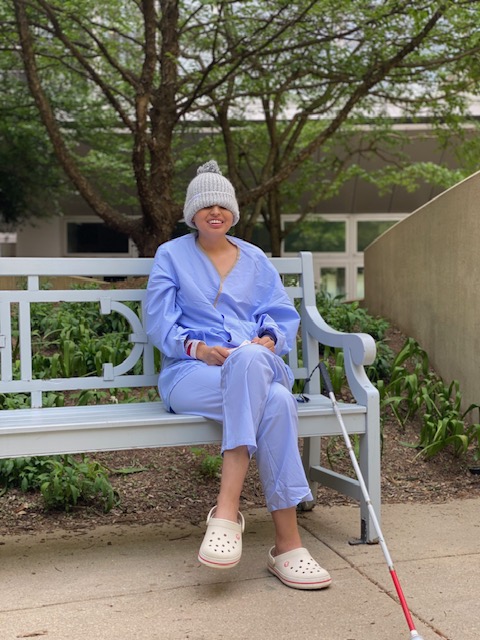
After settling into life at The Inn, Ana began her CAR-T treatment. Typically, she explained, CAR-T therapy is used to bridge people into a transplant. But in her case, because of the extreme rareness of her condition and the ordeals her body had already gone through, doctors believed it could be curative. So they waited to see what sort of impact the treatment was having.
This course of treatment, while less traumatic to her body, did require her to make regular trips to NIH from her home in Costa Rica, staying at The Inn for about a week every couple of months. While she was staying at The Inn, she applied for a Cancer Prevention Fellowship Program through NCI. The CPFP provides a structured postdoctoral experience designed to support research and professional development. For Ana, who had no interest in letting her blindness derail her medical career, it also offered a chance to make a real impact on the future of cancer prevention and care.
She applied to Harvard, Yale, Brown, Columbia, and Johns Hopkins. All of them accepted her. Targeting Johns Hopkins and Harvard in particular, she opted for Hopkins, which gave her a significant scholarship and the Sommers Scholars Award, which granted her access to the Sommers Scholars Program geared at developing a network of public health leaders.
In March 2024, after a year of CAR-T treatments had become increasingly routine, she met with Dr. Shah for what she expected to be a regular check-up. She had already beaten cancer twice and had her third round firmly under control. It was time to focus on the future. But Dr. Shah had more bad news. She had relapsed. The cancer was no longer in her nerves, but a very small amount of it was now in her bone marrow.
By this fourth diagnosis, Ana was beyond feeling shocked. “You kind of get used to it!” she joked. Her reaction this time was anger and frustration, manifesting in her one-word, unprintable response to the news. Dr. Shah understood and was ready with options.
“She told me that this time, they could do a transplant and get me into remission. There was a very low tumor burden this time. They didn’t want to do too much chemotherapy, but they did want to do immunotherapy. While I was receiving that, I had to finalize my dissertation for my master’s in health management.”
Ana was able to defer her enrollment at Hopkins and got her transplant on July 5, 2024. She stayed at NIH for the next three months, living at The Children’s Inn, recovering, and once again focusing her thoughts on the bright future that still, miraculously, lay in store.
It has been almost two years since that transplant, which was performed by Dr. Christopher Kanakry, a senior investigator with the Center for Immuno-Oncology at NCI. Ana’s training, which gave her such a unique perspective on the cancer that has defined the last seven years of her life, also leaves her careful not to get too far ahead of herself. But with doctors continuing to monitor her, she was able to enroll at Johns Hopkins last fall and, at long last, begin her next chapter.
Her goals for the future are broad. In addition to aiding the cause of cancer prevention like leukemia, Ana wants to devote herself to being a patient advocate for the blind. She wants to help connect people to the resources they need to manage the disability, knowing how unprepared for it she had been on that Boxing Day in 2020.
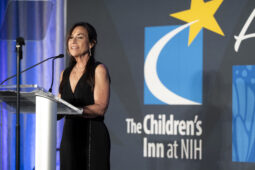
She has also created an initiative called Blind Courage. Its mission is to stand for people dealing with seemingly unbearable suffering by helping them search for meaning. Through this, she wants to begin giving a series of inspirational talks. Blind Courage will launch on May 2 when Ana is scheduled to appear at The Children’s Inn An Evening for Hope gala at the J.W. Marriott Hotel in downtown Washington, D.C.
“I chose that date because The Children’s Inn inspired me to advocate for people dealing with suffering. Blind Courage is my personal way of doing that.”
Most of all though, she summed up her goals for the future the same way she faced down each battle with leukemia, even when her chances of survival were as slim as could be.
“I want to live.”