Helen Takes On Rare Genetic Opponent
An 11-year-old’s unexpected RUNX-1 diagnosis unites her family, fuels critical research, and strengthens her determination to win—on and off the field.
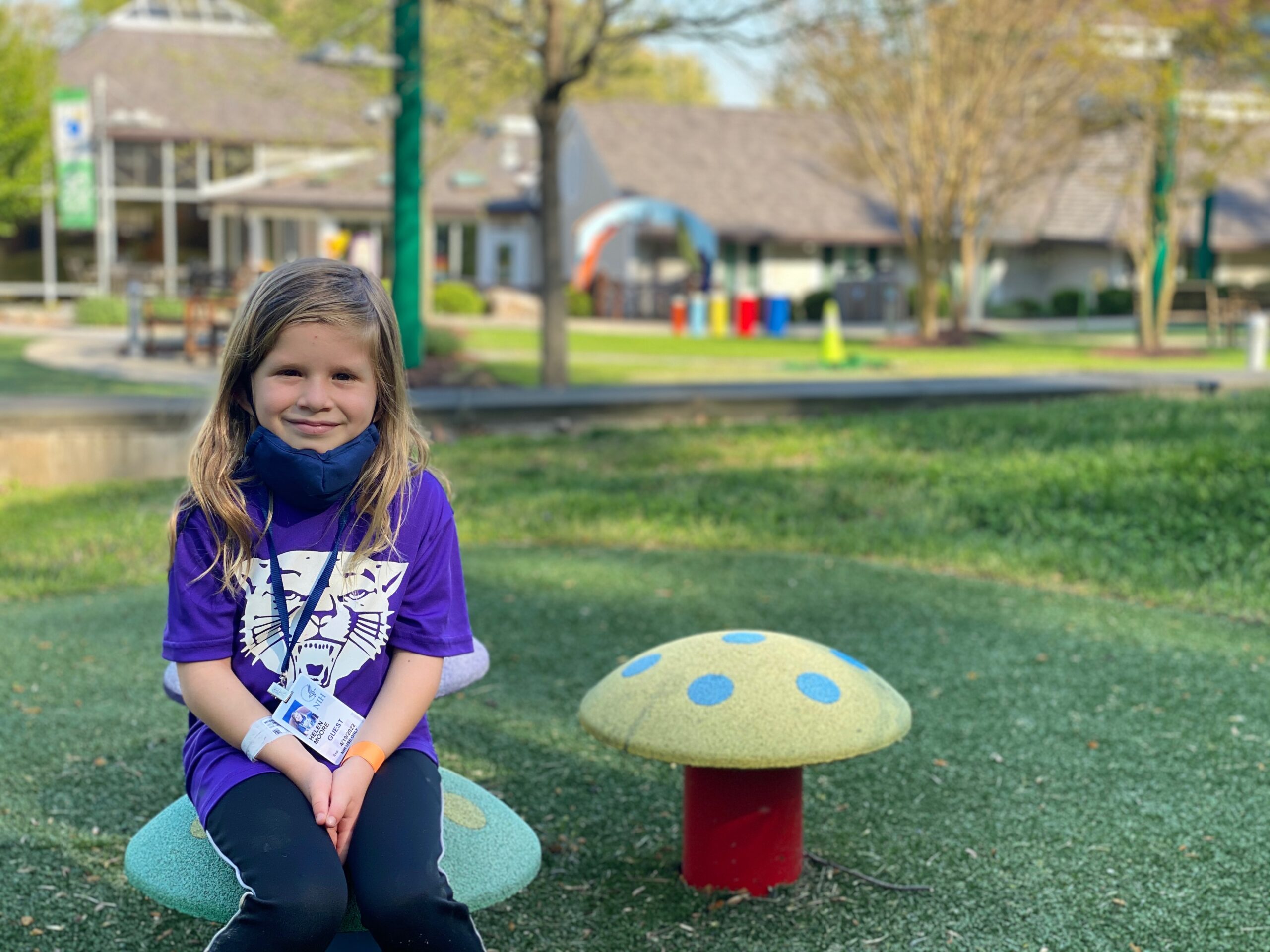
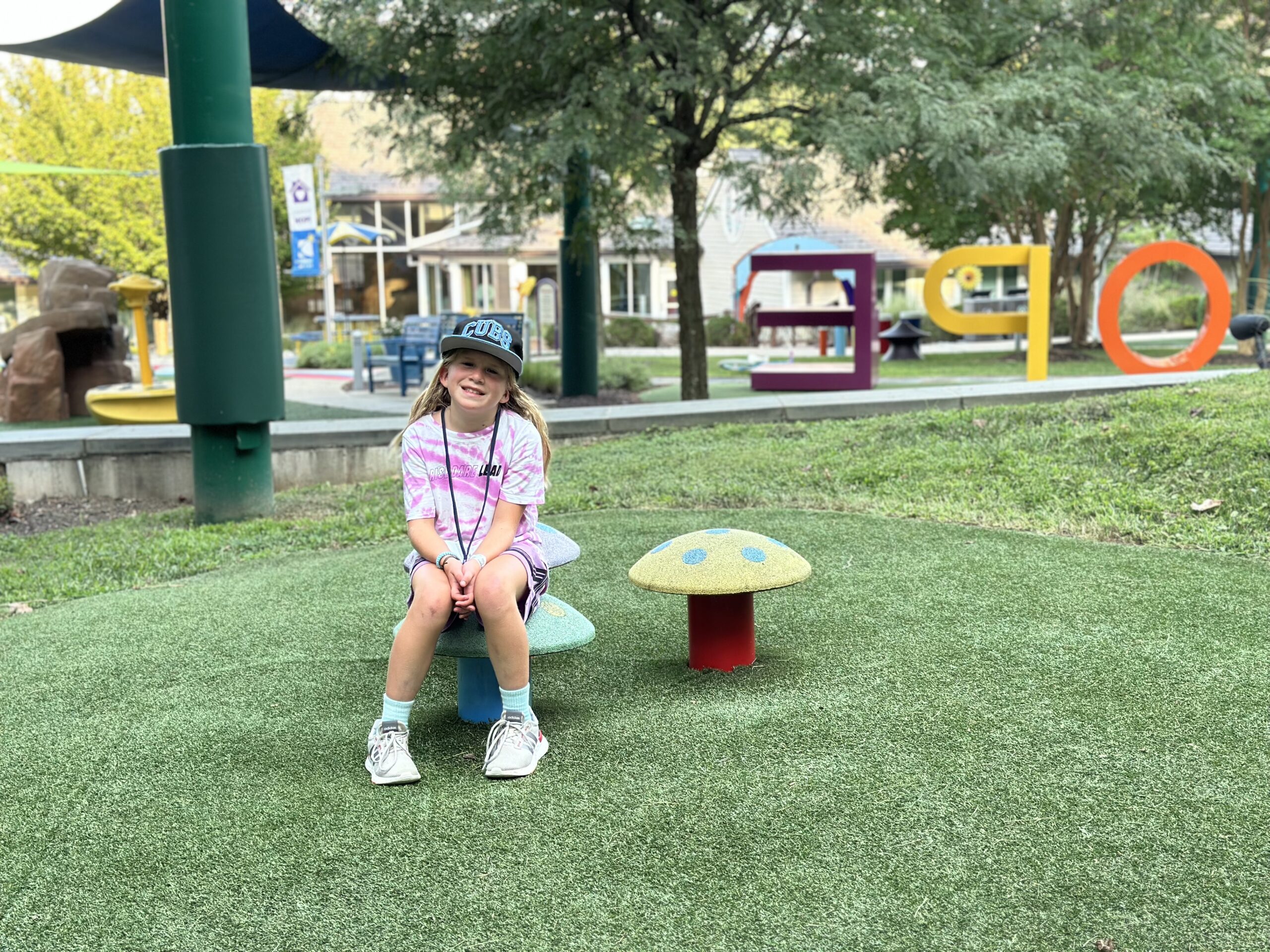
Helen leads an active life. An 11-year-old from Kansas City, Kansas, Helen spends her free time playing flag football, soccer, swimming, and basketball. And when she plays, she expects to win.
“She’s pretty competitive,” laughed her father, Drew. “She likes to win. She’s got some gifts that make her a little bit faster than others, so she’s had some success.”
For the last four years, Helen has also been in a fight against another opponent, one she has to take even more seriously than the kids lined up on the other side of the line of scrimmage. She and several other members of her family have been diagnosed with RUNX-1, a rare genetic blood disorder that predisposes them to leukemia or any kind of blood-borne cancer.
And she almost never knew it.

“She was very short in stature,” Drew recalled, explaining that he and his wife Molly took her to an endocrinologist around the time Helen was in preschool. Everything seemed fine, but a gastroenterologist diagnosed her with celiac disease, which enabled her to begin getting appropriate nutrition and get back on the growth chart. As part of the work-up that led to that diagnosis, the doctor also ordered some genetic testing.
“They wanted to rule out any other genetic syndromes that could have predisposed her to being really short in stature,” Drew explained. “Over the course of these tests, they determined that she had RUNX-1.”
After her diagnosis, the rest of Helen’s family was also tested. As it turned out, Drew, his twin sister Amanda, and their mother all also carried the disorder, something none of them knew until doctors caught it in Helen.
“So as it turned out, RUNX-1 had nothing to do with the height thing,” Drew said. “That was the celiac and a lack of proper nutrition. But it does predispose the family to leukemia.”
At first, Drew explained, there was natural nervousness about what this meant for Helen as she grew up.
“We wanted to learn more about it and how it could impact her. So there was nervousness and anxiety and even guilt. But once you get through all of that, it’s just a matter of wanting to learn and understand more, and then you come to the realization that I had it my entire life, and I was active, my sister was active, and it never impacted anything we did day in and day out. So you come to the resolution that it’s not going to impact Helen.”
Although RUNX-1 was not a diagnosis Drew or anyone in his family was familiar with, it did resolve some lingering familial questions. “We’re happy to know why we all have low platelets,” he said. “We’d all been followed by a hematologist at one point or another. Even they didn’t know why [low blood platelets] was commonly occurring in our family. Come to find out that this RUNX-1 is a genetic disorder that explains it all. Now we have an answer, and then we shifted to ‘how can we proactively work with the NIH and hopefully contribute to finding more information about this disorder that NIH would say is grossly underdiagnosed. Many people have this and just have no idea.”
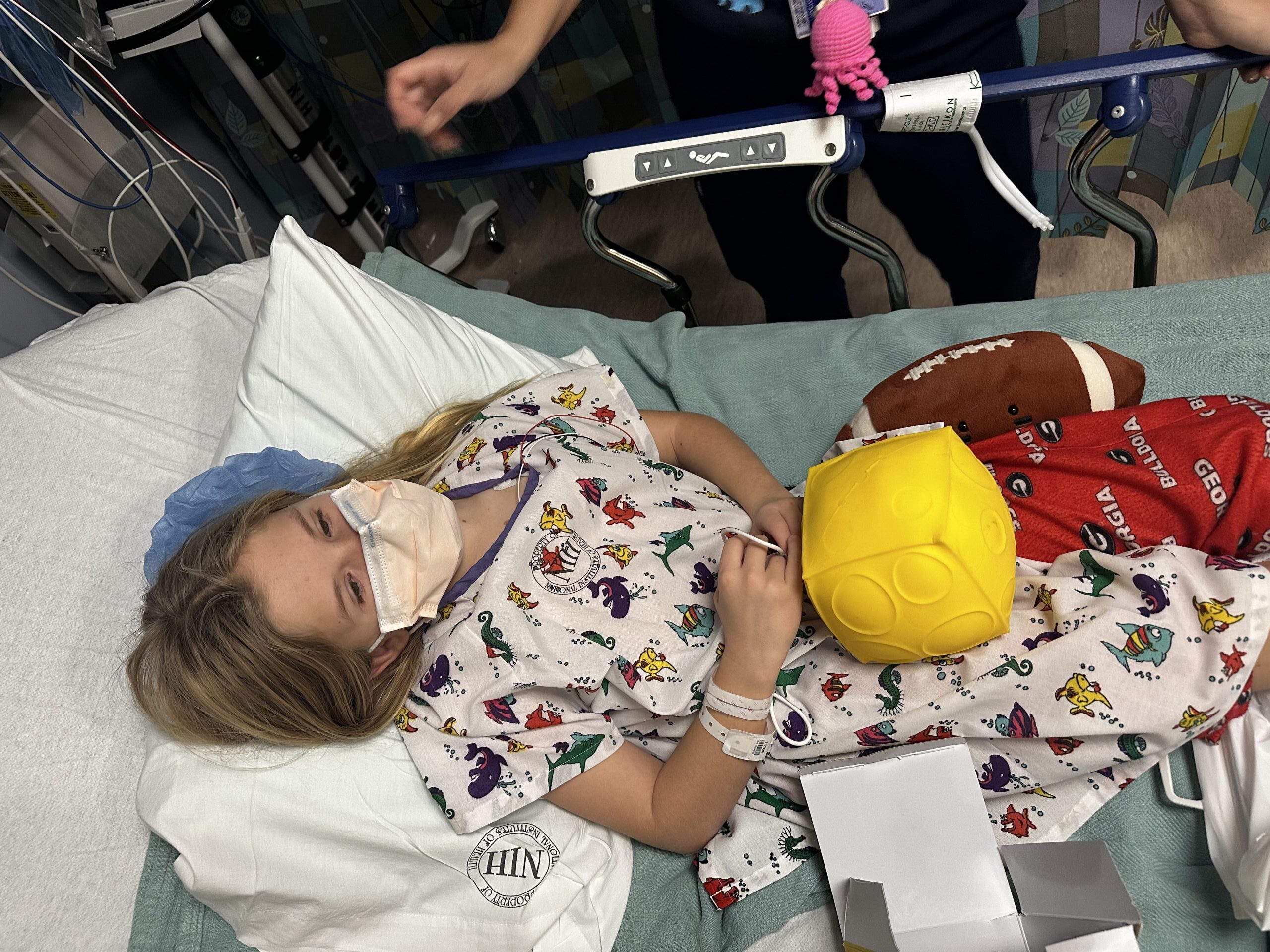
Since April 2021, Helen, her father, and her aunt have participated in a trial run by Dr. Lea Cunningham through the National Cancer Institute to track them on an annual basis.
“No one in my family has developed leukemia, but other families have 100% of people develop it, Drew explained. “So they want to see what’s unique about families like ours that causes this.”
The first year, Drew recalled, involved meeting a lot of different specialists. They would do a significant amount of bloodwork, both for the clinical and research side of treating RUNX-1. “We met with a ton of different specialists,” he said. “Dermatology, radiology, respiratory, neurology. They wanted a baseline of where we were originally and then, as they learn more, how we fit in. The biggest thing is always a bone marrow biopsy. Helen goes completely under with anesthesia for it.”
For Helen’s parents, the visits are significant both for their preventative and their research implications. By coming to NIH and meeting with leading experts in this rare disease, which has only been diagnosed in a few hundred families but is believed to be dramatically underdiagnosed, they can monitor the disorder and, should she or anyone else in their family ever actually develop leukemia, they can catch it as early as possible to treat it. From the research side of things, Drew recognized the value NIH clinicians can get from tracking their family’s lineage to see how more serious complications in other families may be prevented.
But for Helen, the biggest draw to make the annual visit is her time at The Children’s Inn.
“Leading up to a visit, Helen screams anytime we would talk about having to go to the NIH because of the blood draws and the bone marrow biopsy,” Drew said. “If it wasn’t for The Children’s Inn, it would make convincing her to go a lot harder. It would be a lot less enjoyable and all about the medicine. The accommodations and the people are great. And what child doesn’t love getting showered with new gifts like the Thoughtful Treasures or all the little random things that The Inn provides! I think the first time I had to get two extra bags to carry all the stuff home. She got so much stuff that she was even willing to share with her younger sister. She’s spoiled for when she goes to a regular doctor and doesn’t get surprised with some gift every time! As an adult, I forget how exciting those things are.”
Their visits to The Inn are usually around three days long. During those stays, Drew appreciates how Helen is able to be a regular kid when she is not seeing specialists.
Naturally, she has spent a lot of time on the sport court. “Sports are kind of central to everything she does,” Drew smiled. “She’s always got her Jordan sweatshirts and her Jordans on. She’s pretty athletic and loves all things sports. If she’s not in an organized activity, she’s playing in the neighborhood, throwing the football, or playing basketball.”
Although each stay is packed with appointments, Helen also has found time to make use of The Inn’s bikes, and loves spending time on the playground and in the game room, where she gravitates to games like Madden and NCAA Football. But they also get to know some of the other families staying at The Inn, an experience Drew recognizes as giving his daughter a valuable perspective.
“When we’re there at NIH and especially at The Children’s Inn, we see the other families that are dealing with a lot more severe situations and diseases and are here for a lot longer period of time. I know she has anxiety and fears, but we try to explain to her that our situation kind of pales in comparison. But on the other hand, she has [RUNX-1] and her friends don’t. So it’s a balance. We try to acknowledge that we’re really lucky.”
With a family that has remained largely unaffected by this disease, they have carried their whole lives, Drew recognizes the role they are playing in the advancement of medicine. But at the same time, their visits to NIH help put his mind at ease about the future for Helen and the rest of their family.
“This disorder is never leaving my family,” he recognized. “Helen could pass it down to her kids. So our participation is about advancing the research for the greater good, but it’s also about making sure that what Helen specifically can grow up with and her kids could grow up with.”
For Helen, that future she envisions still revolves around sports. Throughout her life in Kansas City, she has had examples of success to guide her through her early involvement in athletics. “The Chiefs have had a run basically her entire life,” Drew laughed. “The Royals have done well. I went to the University of Georgia, and they’ve won two national titles. At the beginning of one season, she told me ‘I want to go to the national championship game this year!’ I had to explain to her that many fans go lifetimes without these things. She’s 11, and she’s been to multiple championship parades. So she’s pretty fortunate.”
With examples like that, Helen has naturally set her sights high. She wants to earn a spot on the United States flag football Olympic team, now that the sport is set to debut at the 2028 Summer Games in Los Angeles. It is also a growing collegiate sport, and someday she hopes to be an NCAA Champion like the Georgia Bulldogs. Once she’s done playing, Helen – who went live on air with Fox 5 during The Children’s Inn’s annual Santa Ride celebration in December – plans to transition into a career as a sports broadcaster.
Helen’s future looks bright, no matter where her athletic endeavors may take her. Thanks to her continued visits to NIH and The Children’s Inn, the future for other families fighting RUNX-1 looks a little bit brighter, too.